An event center is not measured only by its square footage. It is measured by what it leaves in the city when the lights go out and the last attendee heads home.
What an event really takes up
When a three-day congress comes to Plaza Mayor, something happens that you can’t see from the stage. Hotels fill up downtown and in El Poblado. Taxis and ride-hailing apps make more trips. Restaurants in the Zona Viva and the surrounding neighborhoods set out more tables. Local setup, sound, catering and logistics providers bill for weeks to prepare something that lasts three days.
That chain has a name. It’s called meetings tourism, and it is one of the few kinds of tourism that spends heavily on weekdays and in the low season, spreading the money across many small hands instead of concentrating it. Someone attending a medical congress doesn’t come to sunbathe. They come to work, stay several nights and spend money while they are here.
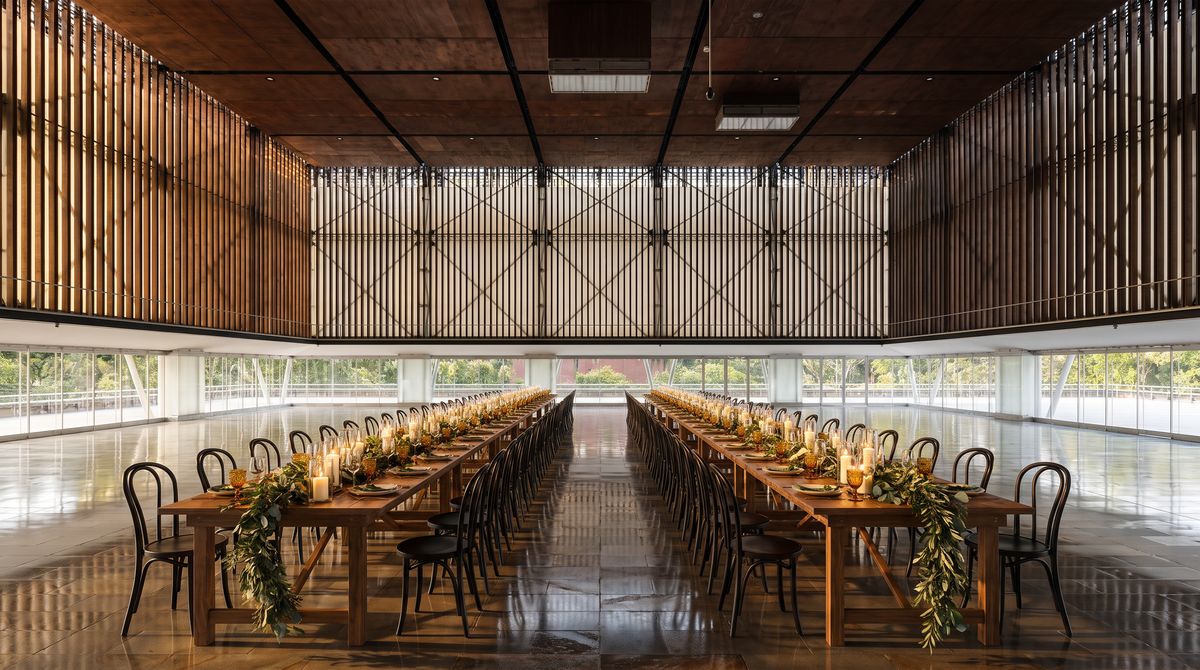
Plaza Mayor provides the infrastructure to make that happen on a large scale. There are 23 rooms in Conventions, totaling 10.584 square meters, and 5 exhibition halls in Exhibitions with 13.142 square meters. More than half a century hosting trade shows and congresses. But infrastructure alone doesn’t create impact. The way it is operated does.
Responsible management is not a brochure slogan
Running a venue responsibly shows in concrete decisions, not in a seal hanging on the wall. It shows in who you buy from. When an event hires local providers for setup, cleaning, security and food, the money stays in Medellín instead of leaving with an outside company. That is the first filter of an operation that thinks about its surroundings.
It also shows in how an event’s consumption is managed. Energy, water, gas and the waste left behind by a trade show with thousands of people. A serious venue measures that consumption and works to reduce it, because a building this size has a large footprint and hiding it doesn’t make it go away. Measuring is the first uncomfortable step, and it has to be taken.
And it shows in safety and accessibility. A space that welcomes large crowds has an obligation to let anyone enter, move around and leave without barriers. Not as a favor. As a minimum condition for operating.
Why it’s good for the city
Medellín has spent years presenting itself as a city of innovation and business. That story needs a place where it truly happens, with the capacity to attract international events that would otherwise go to Bogotá, Cartagena, Panama or Mexico City. A venue that competes for those congresses is fighting to win the city a slice of a global pie.
Every large event won means temporary jobs for hundreds of people, reputation for the city among organizers deciding where to hold their next edition, and a showcase that makes someone who came for work return for pleasure. The math doesn’t add up only at the event’s box office. It adds up at the hotel, at the restaurant and on the return flight the attendee books already thinking about coming back.
That is why responsible management and economic impact are not two separate topics. They are the same one. A venue that takes care of its operation, buys from its own community and is accountable for what it consumes is, in the end, a better business for Medellín. There is no need to choose between the two.
What’s next
In this journal we will tell how this works from the inside. The work of the teams that set up and tear down a trade show in a matter of hours, the decisions almost no one sees and the lessons of running large-scale events in the heart of a living city. No frills. Just as it is.